Coast-to-coast scheduling
We coordinate motorhome floor repair for motorhomes, travel trailers, and fifth wheels across provinces. Seasonal owners often book after dewinterizing or before selling — whenever honesty about moisture matters.
National accounts and single-rig owners get the same plain-language walk-through: what is wet, what must come out, and what it costs before we start.
What motorhome floor repair includes on a typical rig
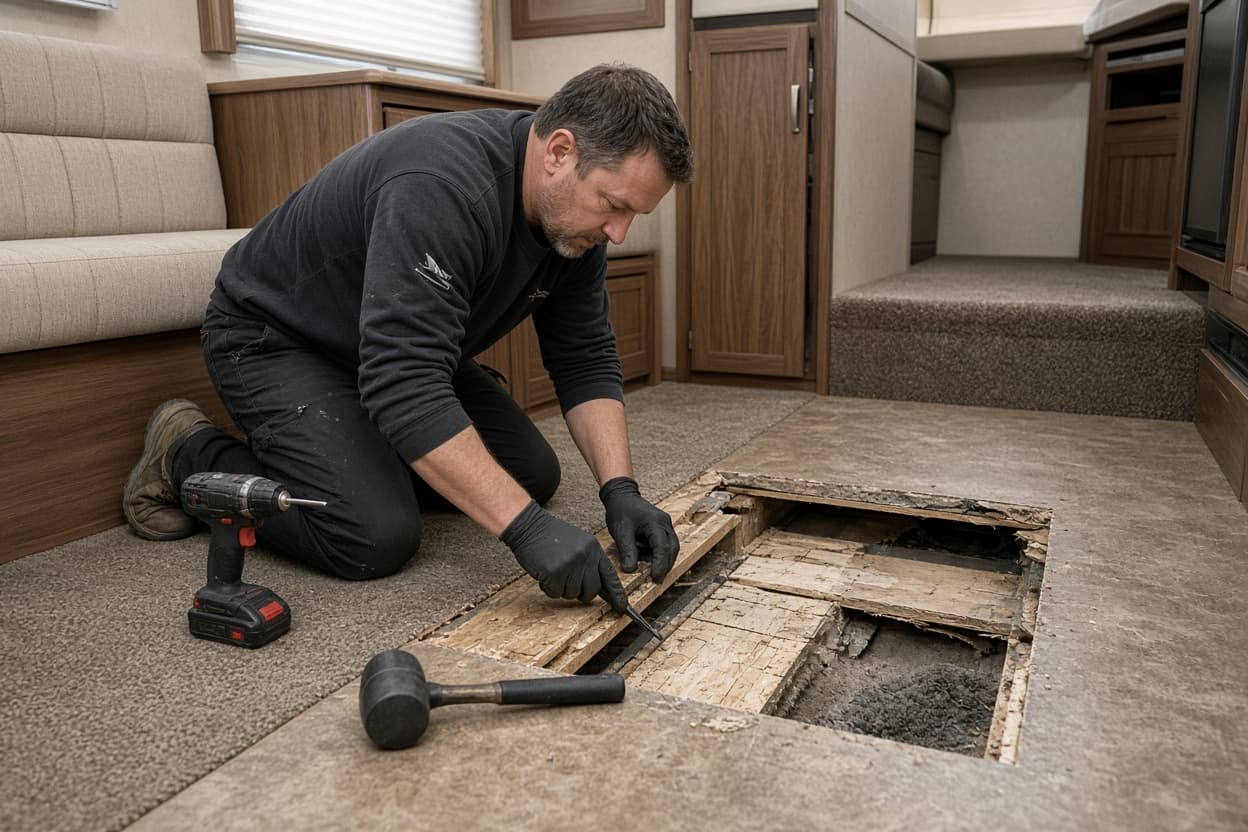
Every manufacturer routes wiring, plumbing, and insulation differently. We treat motorhome floor repair as a process: confirm the leak path, remove only what cannot dry safely, replace with compatible thickness and fasteners, and re-test before we close walls or floors.
Owners often ask whether they can keep camping with a small stain. We measure moisture behind finishes — if readings stay high, hidden mould or rot continues even when the surface looks fine. Acting early keeps motorhome floor repair scoped to a bay or section instead of a full shell.
After repair, we leave written notes on what was sealed or rebuilt, what to watch on the next rain, and when to re-check roof laps or slide seals. That matters on long hauls where vibration loosens fittings you cannot see from the ground.
Many owners combine motorhome floor repair with a roof walk or seal inspection so the entry point and interior damage are handled in one plan.
Planning your appointment
Have your RV year, make, model, and roof type ready when you call. Photos of stains, soft floors, or delamination help dispatch match you with the right technician and parts.
If the unit is in storage, tell us gate codes, aisle width, and power availability for drying equipment. We work in driveways, dealer lots, and campground sites when access is safe.
Seasons, storage, and when to call
Spring dewinterizing exposes leaks that grew under snow load. Summer hail and tree branches puncture roof membranes. Fall lay-up traps humidity if vents stay closed. We align motorhome floor repair with how you actually use the rig — not a one-size house mold protocol.
Snowbirds and cross-country travelers often book mid-route when a new drip appears after a long driving day. Tell us your timeline; we prioritize rigs with active moisture and trips already booked.
Keep maintenance records after motorhome floor repair — resale and insurance both go smoother when moisture work is documented with dates and photos.
What we look for on your rig
During motorhome floor repair, we start with how water enters: failed sealant, cracked gaskets, loose fittings, or condensation trapped after lay-up. We follow staining, soft spots, and musty areas until the path makes sense — not just the visible damage.
Lightweight plywood, luan, and foam insulation dry differently than residential walls. We keep structure open until readings are safe, document what must be removed, and explain what can stay.
What to expect when you call
You will speak with a coordinator, not an automated queue. Share your city, RV year/make/model, and symptoms — drip, bubble, spongy floor, or odour after storage.
We quote leak tracing, drying, or rebuild scope before major demolition. If insurance needs photos or moisture logs, we can provide them when useful.
Why act before the next trip
Water that sits continues along screw lines and edge grain. Mould follows moisture that never fully dried. A smaller repair today often prevents a full floor or wall replacement later.
After work completes, we note what was fixed, what to monitor, and when to re-check seals — especially before long hauls or winter storage.
Frequently asked questions
Do you work on motorhomes and travel trailers for motorhome floor repair?
Yes — Class A/B/C motorhomes, travel trailers, fifth wheels, and truck campers. Tell us roof type (rubber, fibreglass, aluminum) and where damage shows; we match sealants and rebuild methods to how your unit is built.
Will you quote before tearing anything out?
We explain leak tracing vs. tear-out scope and pricing before major demolition. If moisture is deeper than expected after opening a small area, we stop and discuss options — no surprise bills without talking to you first.
Can you help with insurance documentation?
Many owners need photos, moisture readings, and a short summary after sudden leaks. Tell us when you call; we document what we find in a way you can share with your adjuster.